

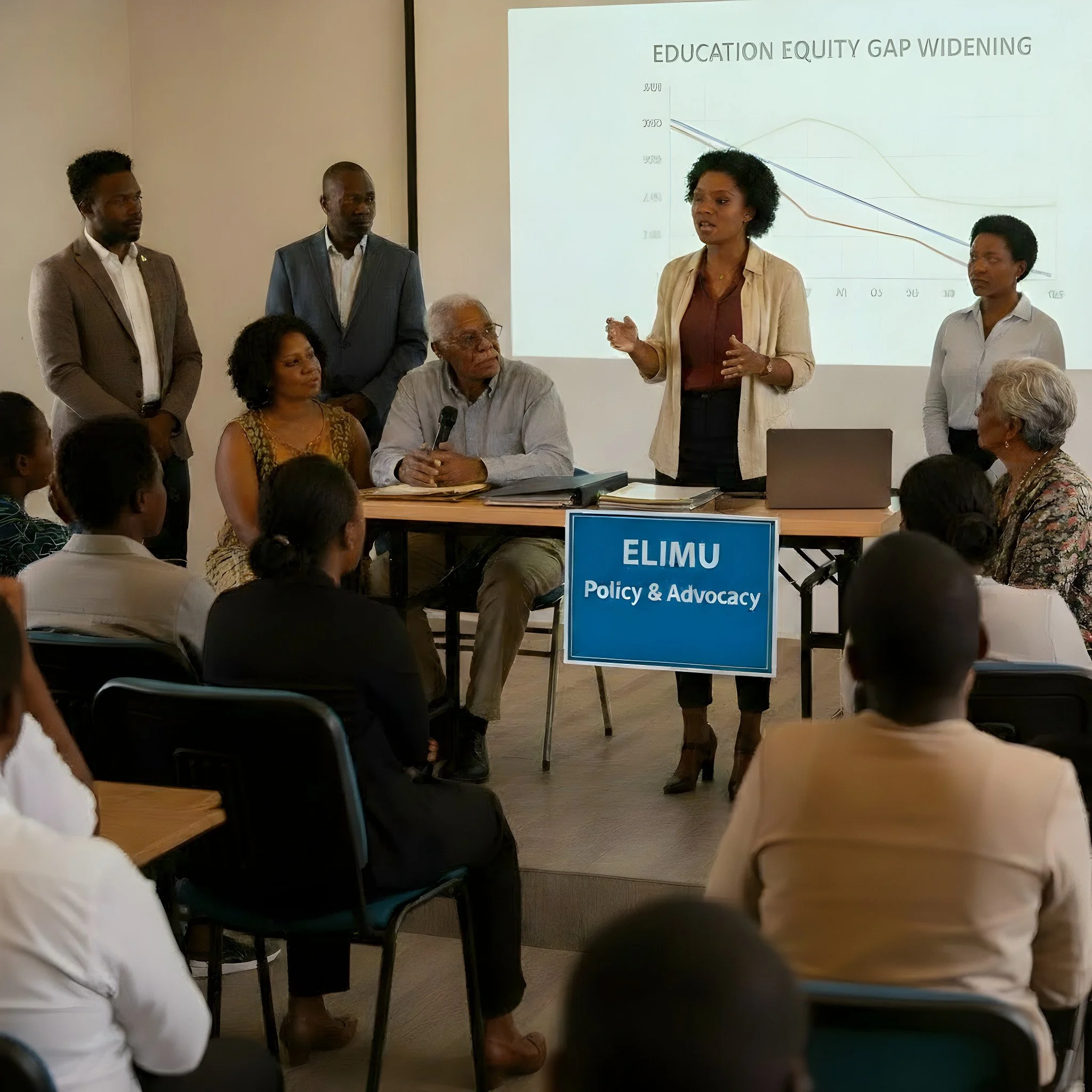
The ELIMU Initiative advances policy and advocacy efforts that center the educational needs, lived experiences, and cultural wisdom of Black children, families, and communities. We work to ensure that educational policies, institutional practices, and public decisions promote equity, access, and accountability across schools, faith institutions, and community systems.
Our advocacy approach is research-informed, community-rooted, and solutions-focused. Through policy education, community forums, strategic partnerships, and stakeholder engagement, ELIMU helps communities understand how policy decisions shape learning environments, resource distribution, and student outcomes. We equip families, educators, faith leaders, and organizations to engage in informed advocacy that strengthens educational opportunity and community well-being.
Policy and advocacy at ELIMU are not about politics—they are about grounded values, visibility, and voice. Sustainable change occurs when communities are informed, organized, and empowered to shape the systems that serve their children and future generations.
Policy and Advocacy
How ELIMU Delivers Policy & Advocacy
ELIMU approaches policy and advocacy through flexible, research-informed learning experiences designed to meet communities where they are—while maintaining depth, rigor, and cultural integrity. Our offerings are provided through the following delivery models:
-

Policy Education & Analysis
Translating legislation, regulations, and institutional policies into accessible, community-centered knowledge so families, educators, and leaders understand how decisions impact learning and opportunity.
-
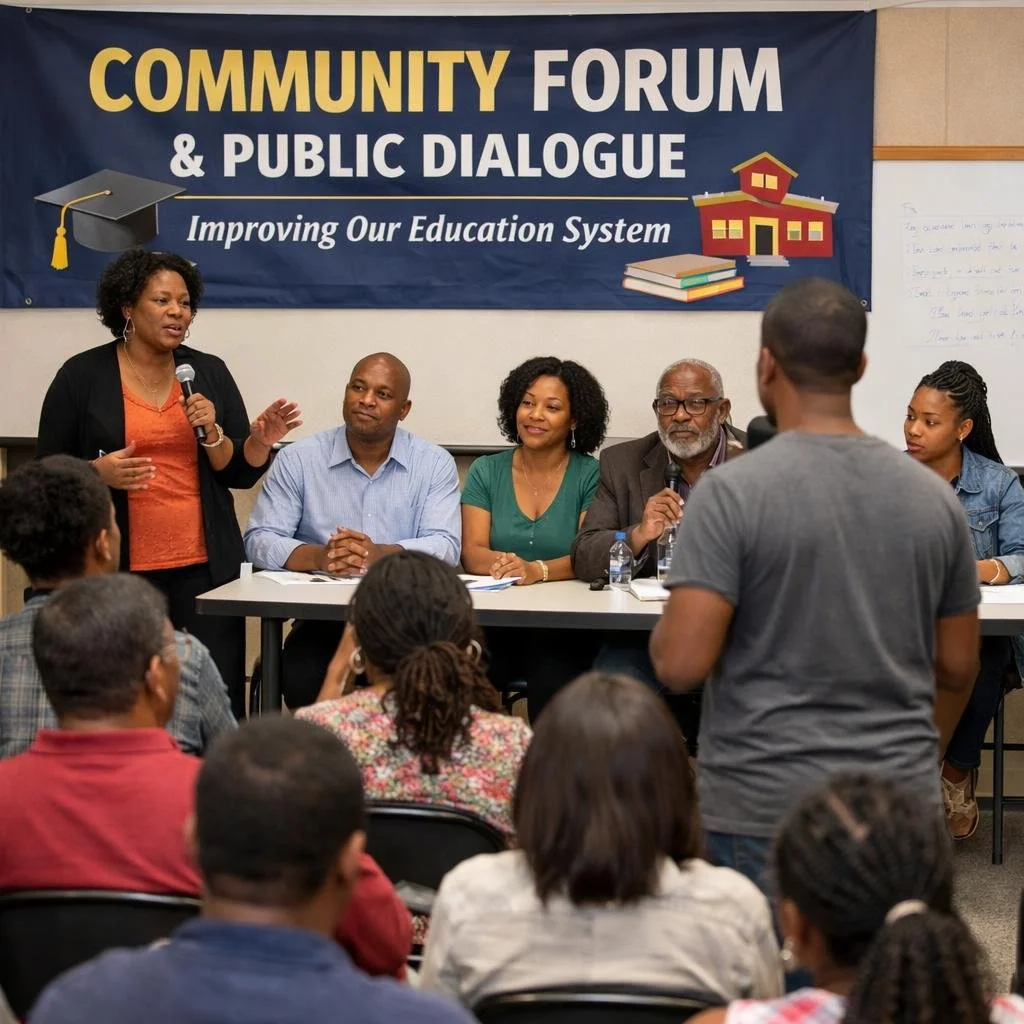
Community Forums & Public Dialogue
Facilitating conversations, workshops, and town-hall-style engagements that elevate community voice, lived experience, and collective problem-solving around educational issues.
-
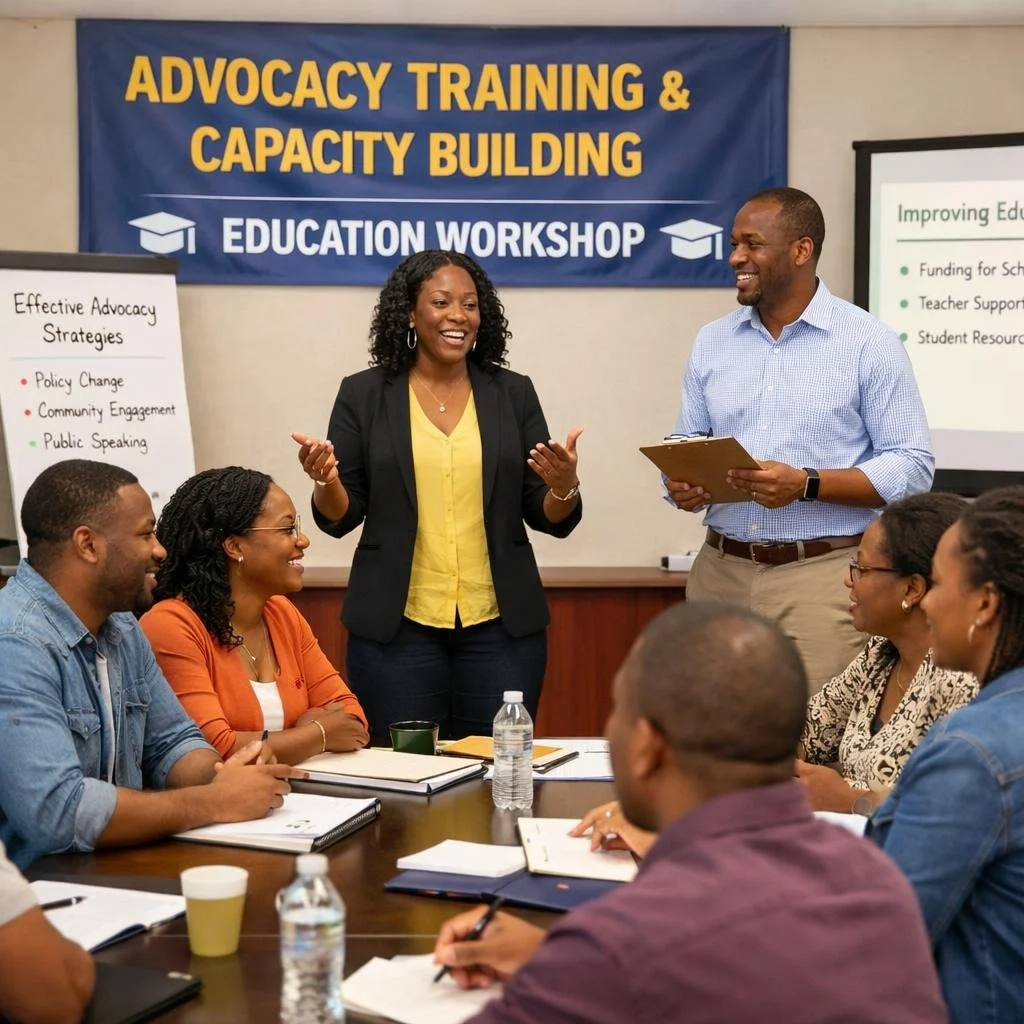
Advocacy Training & Capacity Building
Equipping families, faith leaders, educators, and organizations with tools to engage decision-makers, influence policy, and advocate effectively at local, state, and institutional levels.
-
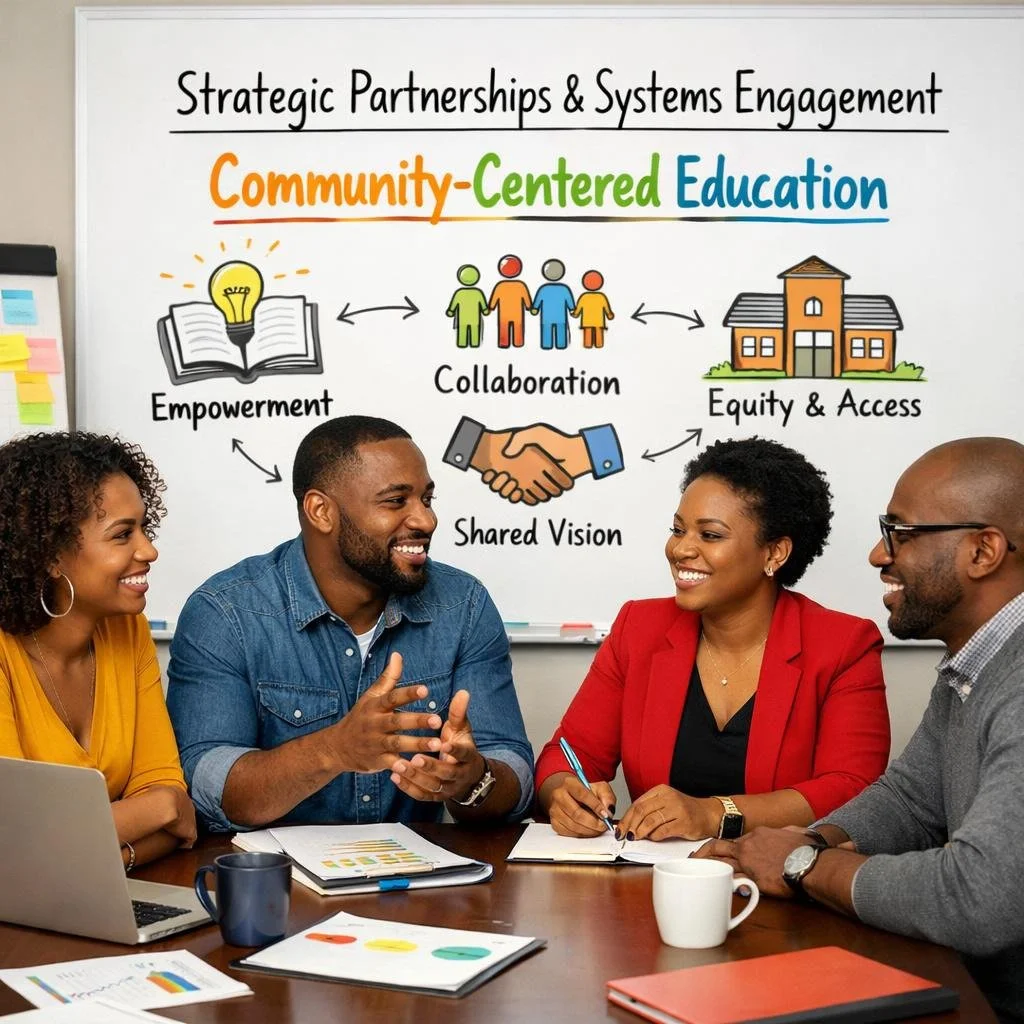
Strategic Partnerships & Systems Engagement
Collaborating with schools, churches, nonprofits, researchers, and civic leaders to advance policies that protect culturally grounded, identity-affirming, and community-responsive education.